








| Word | Class Definition* | Secondary Definition | Image of the Word |
|---|---|---|---|
| Algorithm | An ordered set of well-defined instructions for the solution of a problem in a finite number of steps. | a precise rule (or set of rules) specifying how to solve some problem. (Webopedia, 2011) | |
| Bit | Contraction of the term binary digit; hence 0 and 1. | A bit is a the basic unit of information in computing and telecommunications; it is the amount of information that can be stored by a digital device or other physical system that can usually exist in only two distinct states. (Wikipedia, 2011) | |
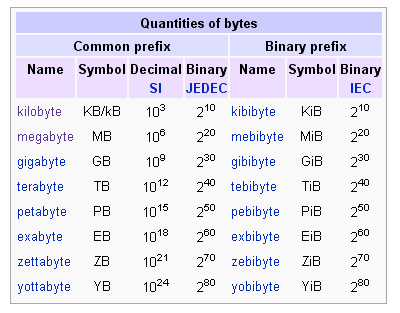
| Byte | Contraction of the term binary term; smallest unit of information which can be accessed directly by a computer. Most modern computers use 8-bit, 16,-bit,32-bit or 64-bit bytes. | A sequence of 8 bits (enough to represent one character of alphanumeric data) processed as a single unit of information. (Wikipedia, 2011) | |
| Computer | A programmable device for the processing of information. | A computer is a programmable machine that receives input, stores and manipulates data//information, and provides output in a useful format. (Wikipedia, 2011) | |
| Binary Code | A scheme for encoding data using only the digits 0 and 1; binary code can be used to encode te, 2011)t, images, sound and programs, amongst other data. | code using a string of 8 binary digits to represent characters (TheFreeDictionary, 2011) | |
| Bus | An electrical connection through which data are transmitted, there is a sender and a receiver. | In computer architecture, a bus is a subsystem that transfers data between computer components inside a computer or between computers. (Wikipedia, 2011) | |
| CPU | Acronym for Central Processing Unit: a miniaturized electronic component which controls the execution of a computer and performs basic arithmetic and logical operations. Colloquially called the computers' brain. | A central processing unit which is the main logic unit of a computer. (Linfo, 2011) | |
| Monitor | A visual-display device on which a computer displays information about it's internal state, allowing people to monitor the activities of the computer. | display produced by a device that takes signals and displays them on a television screen or a computer monitor (http://(TheFreeDictionary, 2011) | |
| Output Devices | Devices used by a computer to put out information. Common examples include, monitors, printers, speakers, earphones, headphones, LED lights, data projectors, fax, modems, game controllers and disc drives. | those devices that receive output from the computer. Examples of output devices would be traditional monitor, floppy drive, hard drive, CD rom drive, speakers, printers, A to D (analog to digital) devices/sensors, touch screen monitor, photo maker, transparency maker, etc. (Trinity, 2011) | |
| Programmable | Capable of performing varied and different tasks, limited only by the sophistication of the programs provided. | Equipped with software that enables the user to create new sounds or other assignments by altering parameter settings and storing the new settings in memory. An individual control parameter is said to be programmable if its setting can be stored separately with each individual patch. (Digital Hymnal, 2011), 2011) | |
| Program | A set of instructions that the device follows that tells it what to do. The instructions must be written in a language which the computer understands. | Instructions and associated data, stored in electronic format, that direct the computer to accomplish a task.(The Computer Folks, 2011) | |
| Processing | Steps that make information usable i.e. creation, manipulation, and deletion. | The action of the verb to process; The act of taking something through a set of prescribed procedures (Wikitionary, 2011) | |
| Information | Words, pictures and sounds which have meaning to us. | A message or collection of messages that consists of symbols in an ordered sequence. (Wikipedia , 2011) | |
| Software | A play on the word Hardware. Synonym of program. | The programs residing on disk, tape, or other storage media used by the computer to accomplish its tasks. (EdiBasics, 2011) | |
| Hardware | The physical parts of a computer that help it perform its desired tasks. Basically, anything that is a part of the computer which can be seen and touched. | These are the physical items including your computer and floppy discs. (HTML Goodies, 2011) | |
| System Unit | A plastic or metal box which contains the principal parts of a computer. Usually, CPU,RAM, Rom and various connecting cables and an AC/DC converter. In modern microcomputers, it's common to find peripheral device to be installed inside the system unit; examples include modems, card readers and disc drives. | The box that contains the inner workings of the computer. (Executive Tuition, 2011) | |
| Peripheral | Any hardware element which is peripheral to its system unit. Common examples are input devices and output devices. Even output devices which are often found within the system unit are considered peripheral because they are peripheral to the core elements of the case. | A connectable device that has an auxiliary function outside of the permanent system configuration. (Compu Label, 2011) | |
| Input Devices | Devices used to put in information into a computer. Common examples nuclide, keyboards, mice, scanners, microphones, cameras, gyroscopes, game controllers, USB devices, infrared remote controls, touch pads, touch screens, graphics tablets, disc drives, SD cards, motion sensors, and modems. | those devices that provide input to the computer. Examples of input devices would be keyboard, light pen, graphics tablet, bar code reader, mouse, scanner, digital camera, floppy drive, hard drive, CD rom drive, electronic keyboard (music), microphone,(Trinity, 2011) | |
| Primary Storage | A miniaturied electronic component which provides temporary storage of information. Primary storage is volatile; because all the memory is erased when electricity is cut- and relatively expensive, bit it's used because it's fast and (with a few exceptions) is the only storage which the CPU and can access directly. | Computer data storage, often called storage or memory, refers to computer components and recording media that retain digital data used for computing for some interval of time. Computer data storage provides one of the core functions of the modern computer, that of information retention. ... (Wikipedia, 2011) | |
| RAM | Acronym for random access memory, accessible in a random order by the CPU. | RAM is the place in a computer where the operating system, application programs, and the data in the current use are kept so that they can be quickly reached by the computer's processor. (Search Mobile Computing, 2011) | |
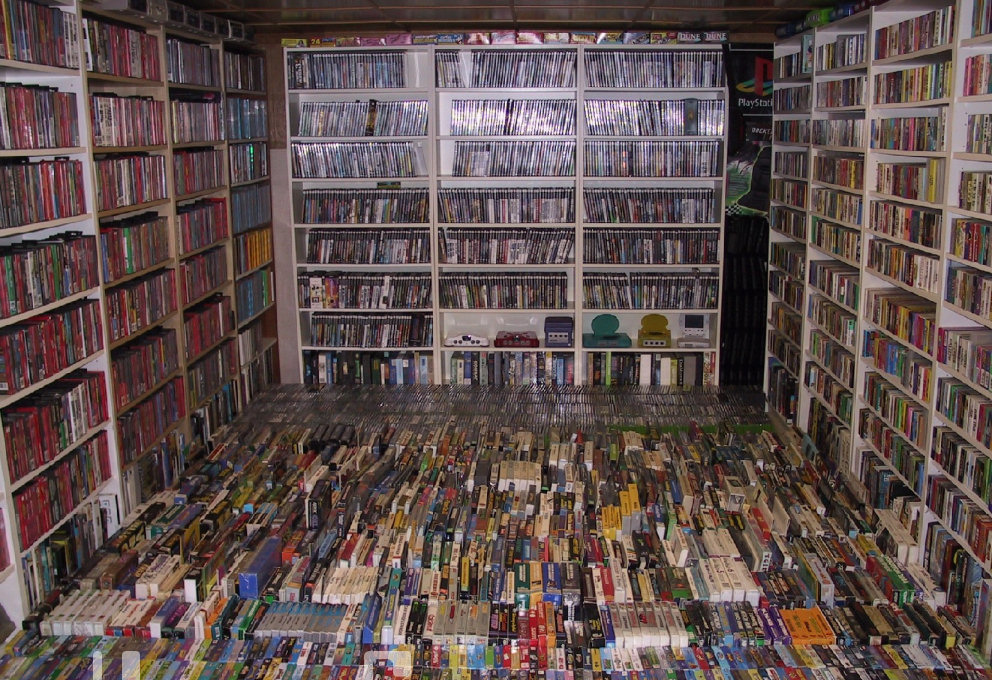
| Secondary Storage | Any storage medium which provides (relatively) permanent storage of information. Secondary storage is the non-volatile and relatively inexpensive but it's slow. With few exceptions, secondary storage cannot be accessed directly by the CPU. The most common example of secondary storage are magnetic and optical discs, such as magnetic tape and flash memory. | A non-volatile storage subsystem in a computer that stores the operating system, applications and user data in a manner available to the computer and its user through its service life. This typically would describe the hard disk, solid-state devices, optical drives, memory cards and USB memory keys. (Home Networking, 2011) | |
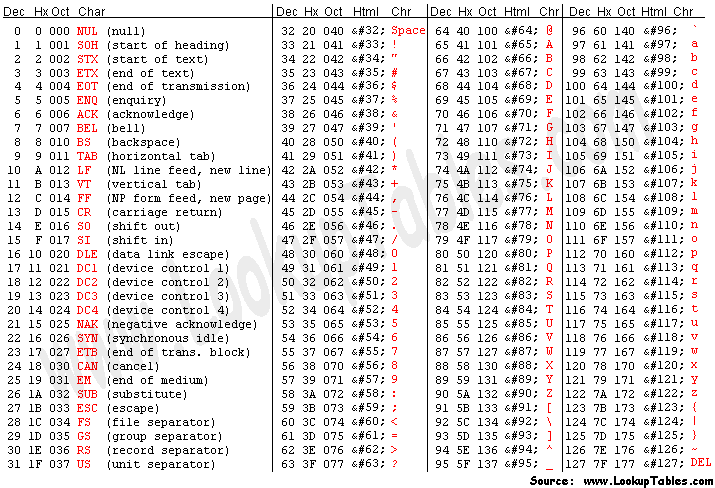
| Character | A single letter of digit, or a special symbol like punctuation marks, the dollar sign and a blank space. | The character set used in the ISO 9660 Volume Descriptors. (CD Media World, 2011) | |
| String | A collection of like units treated as a whole; i.e. Character strings or bit strings. | A user-defined grouping of products or ingredients. In computer programming, a string is traditionally a sequence of characters, either as a literal constant or as some kind of variable. The latter may allow its elements to be mutated and/or the length changed, or it may be fixed (after creation). A string is generally understood as a data type and is often implemented as a byte (or word) array that stores a sequence of elements, typically characters, using some character encoding. A string may also denote more general array data types and/or other sequential data types and structures; terms such as byte string, or more general, string of datatype, or datatype-string, are sometimes used to denote strings in which the stored data does not (necessarily) represent text. (Wikipedia, 2011) | |
| ASCII | Acronym for American Standard Code for Information Interchange; an international standard for encoding characters into 7-bit codes, ASCII is the basis of the more modern and inclusive Unicode Standard. | American (National) Standard Code for Information Interchange. A standard character-to-number encoding widely used in the computer industry. (Rohan, 2011) | |
| File | A logical collection of files stored under a single name. | A collection of data, programs, etc., stored in a computer's memory or on a storage device under a single identifying name (Wikipedia, 2011) | |
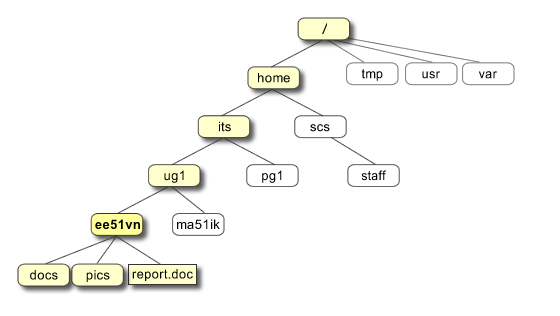
| Directory | A logical collection of files stored under a single name. | A listing of the files stored in memory (usually on a hard disk). (Princeton, 2011) | |
| Root | Short for" root directory" ; the main directory, in a hierarchal directory structure which (logically) contains all the other directories; in DOS and windows based systems the root directory is represented by a back slash (\); in Mac OS, Unix and Linux systems, the root directory is represented by a slash (/). | The Filesystem Hierarchy Standard (FHS) defines the main directories and their contents in Linux operating systems. For the most part, it is a formalization and extension of the traditional BSD filesystem hierarchy. (Wikipedia, 2011) | |
| Application Software | a program which allows us to apply ourselves to a particular task, such as editing an image, accessing the Internet resources or playing a game. | Computer programs designed to directly deal with solving the user's problems (IA state, 2011) | |
| Operation System | A set of programs which tells a computer how to perform it most basic tasks such as " reading " information from input devices, " writing " information to output devices and executing the instructions of launched software. | Software controlling the overall operation of a multipurpose computer system, including such tasks as memory allocation, input and output distribution, interrupt processing, and job scheduling. (Satech, 2011) | |
| ROM | Read-only-memory | read-only memory: (computer science) memory whose contents can be accessed and read but cannot be changed (Princeton, 2011) | |
| Booting | the process by which a computer loads it operating system in primary storage from secondary storage using the instructions found in ROM. | A term used to describe what happens to a computer when it is turned on, the operating system begins to run, and then the user is able to use the computer successfully. (Tesco Software, 2011) | |
| USB | Universal Serial Bus; a standard for connecting periphirals to a computer over inexpensive cables. | Stands for Universal Serial Bus. Is a method of connecting devices to a computer. Most smartphones now use microUSB cables to charge and sync. (Andriod Central, 2011) | |
| FireWire | Apple's name for the IEEE 1344 High speed serial bus also called iLINK by Sony and Lynx by Texas Instruments. | A high-speed data bus. Firewire is particularly well suited to desktop video and audio applications, but hard disks and other devices also are starting to use this interface. (Markco Printing, 2011) | |
*All Class Definitions are from Arkin, 2011