 With the Lego Mindstorms NXT 2.0 robotics kit, this seemingly complicated task can be done, and the process so simple, children can fabricate their own artificial intelligence.
Imagine—being able to create robots, machines that not only can perform whatever bid to do, but are capable of “thinking” for themselves. With the Lego Mindstorms NXT 2.0 robotics kit, this seemingly complicated task can be done, and the process so simple, children can fabricate their own artificial intelligence.
Named after the book Mindstorms: Children, Computers, and Powerful Ideas by Seymour Papert, Lego Mindstorms products first became commercially available in 1998. Its original name was the Robotics Invention System (RIS). Two other versions have been released since. 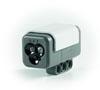
The newest kit comes with 619 pieces of bricks, wheels, and cables. As with the previous model (Lego Mindstorms NXT), the bricks are not traditional LEGO bricks. They are thinner, and do not include studs. There are also gears, beams, axles, and pegs. Included as well are: a colour sensor, two touch sensors, an ultrasonic sensor, and three motors, which allow movement and interaction with the robot’s surrounding environment.
Finally, an NXT brick serves as the brain, processing information from the sensors, controlling the robot’s movement, and communicating with other robots. Using the brick, which has a display screen and five control buttons, one can write simple programs.
 Additionally, programming can be done with the NXT-G software that comes with the kit. Developed by National Instruments (NI) LabVIEW, it has a simple, user-friendly interface. From a function block menu on the left, one can drag and drop blocks onto the workspace. Each block performs a specific task, such as controlling sensors, motor movement, measuring distances, or even playing back a recorded message! Arranging the commands into a logical order is like assembling LEGO bricks.
Block by block, both new and experienced users can efficiently write programs, and then download it onto the NXT brick via Bluetooth or a USB cable. The NXT will then execute the received code. However, it is best used for writing shorter programs, as more complicated programs often cause the software to crash, or run very slowly.
For more advanced programming, there are a variety of other programs that are compatible with the NXT brick. Among the more commonly used are: LabVIEW Toolkit, Next Byte Codes (NBC), pbLua, and RobotC. The original NXT-G software is a graphic icon-based program, but there are also text-based and wireless programs that can be used with the robot.
 With the reasonable and affordable price, many are able to purchase this innovation. Large public interest has led to the development of a Lego Mindstorms Education line, and several annual robotics competitions. Fun and educational, both young and old can explore the world of robotics through hands-on projects. From assembling to programming, every step is designed to be intuitive but not too challenging.
It all begins with a single LEGO brick and a powerful idea.
Images:
Background image from wallpapers.pixxp.com; retrieved 2011-01-04. Original RCX brick image from Lego Mindstorms RCX: Wikipedia; retrieved 2011-01-04. Colour sensor image from www.shop-robopolis.com; retrieved 2011-01-05. NXT-G software interface image from support.dce.felk.cvut.cz/roboti; retrieved 2011-01-04. First Lego League Logo image from www.cnf.cornell.edu; retrieved 2011-01-05
Research:
Information on Lego Mindstorms programming software from How LEGO® MINDSTORMS® NXT Works. Retrieved 2011-01-03 from <http://www.ni.com/academic/mindstorms/works.htm>.
General information and reviews on Mindstorms product from mindstorms.lego.com and legomindstormsnxt20.org Both retrieved 2011-01-04 from <http://mindstorms.lego.com/en-us/history/default.aspx> and <href="http://legomindstormsnxt20.org/>.


